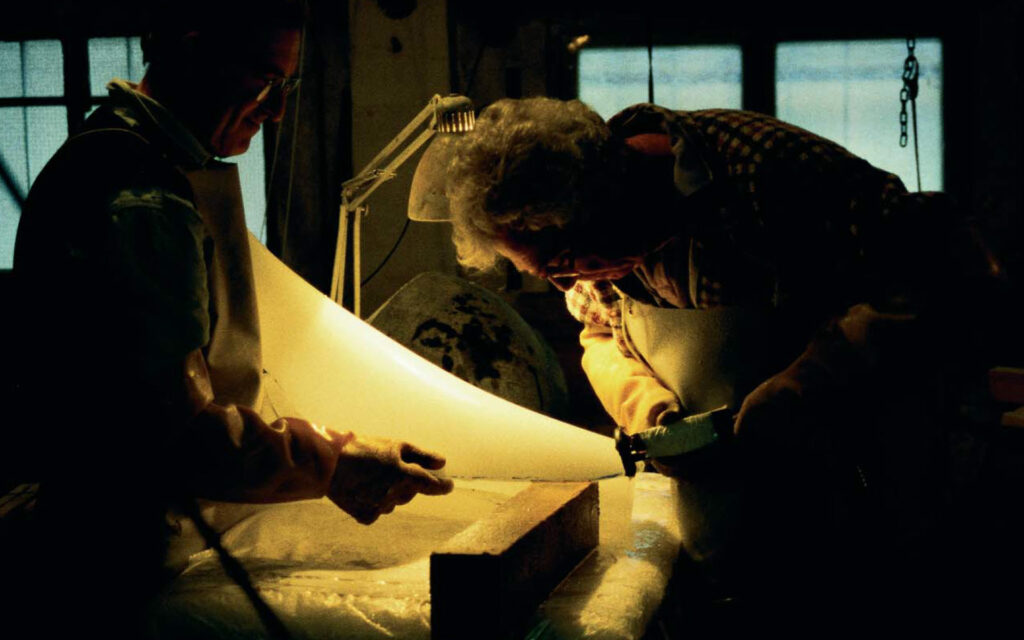
Born in Venice on 24 February 1931, Luciano Vistosi spent his childhood in Murano, where his family owned a glassworks producing industrial products. When his father died in 1952, he interrupted his studies and, together with his uncle Oreste and his brother Gino, founded the new Vetreria Vistosi with the aim of creating products linked to the latest research in the field of design. With foresight, he sensed the future success of design objects, creating them himself and involving prestigious names such as Aulenti, Zanuso, Magistretti, Sottsass, Peduzzi Riva, Dal Lago, Meronen Beckmann, Mangiarotti and many others, he inaugurated a successful production period that successfully projected Venetian glass onto a stage that was no longer and not only tourist-oriented, but rather a fortunate symbiosis of modern refinement and creativity. Following the premature death of his uncle Oreste and his brother Gino, the Vistosi Glassworks was sold in 1980.
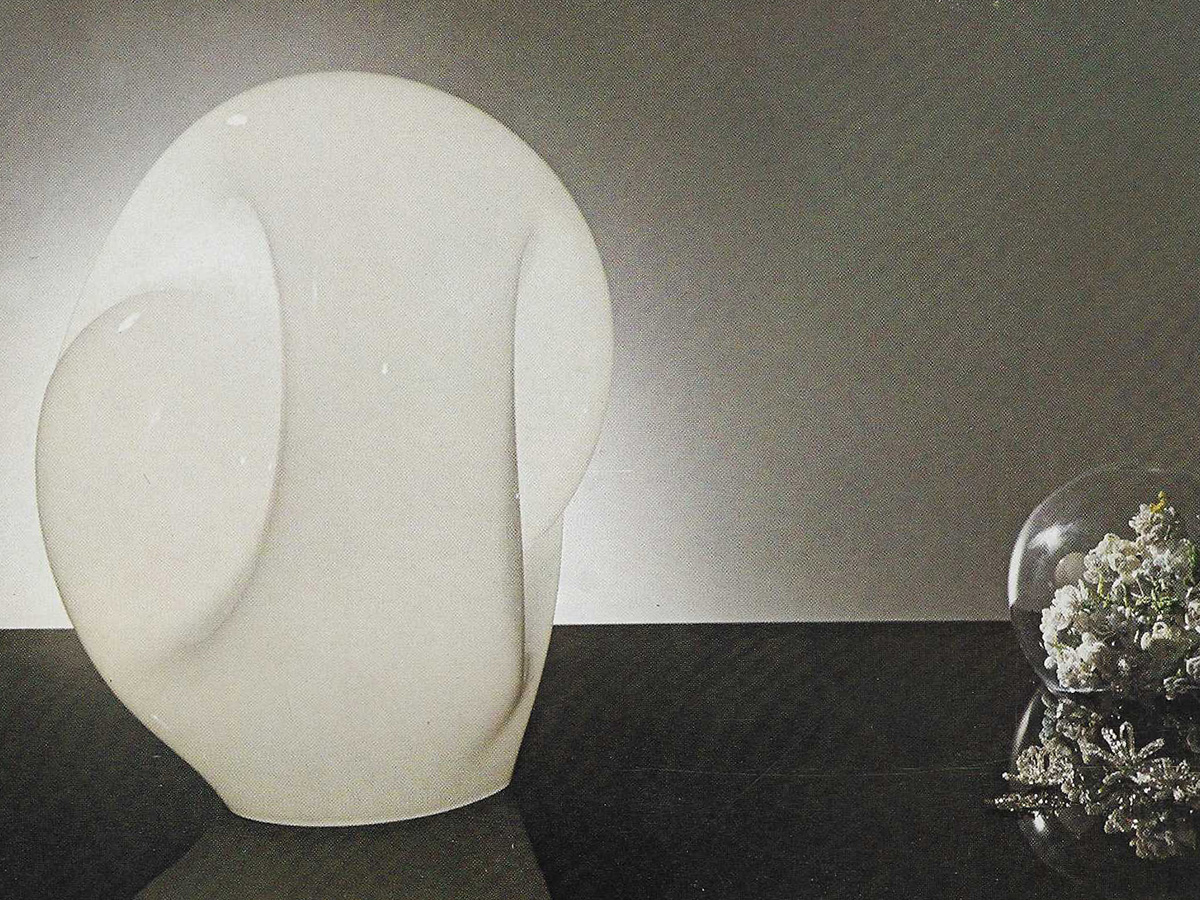
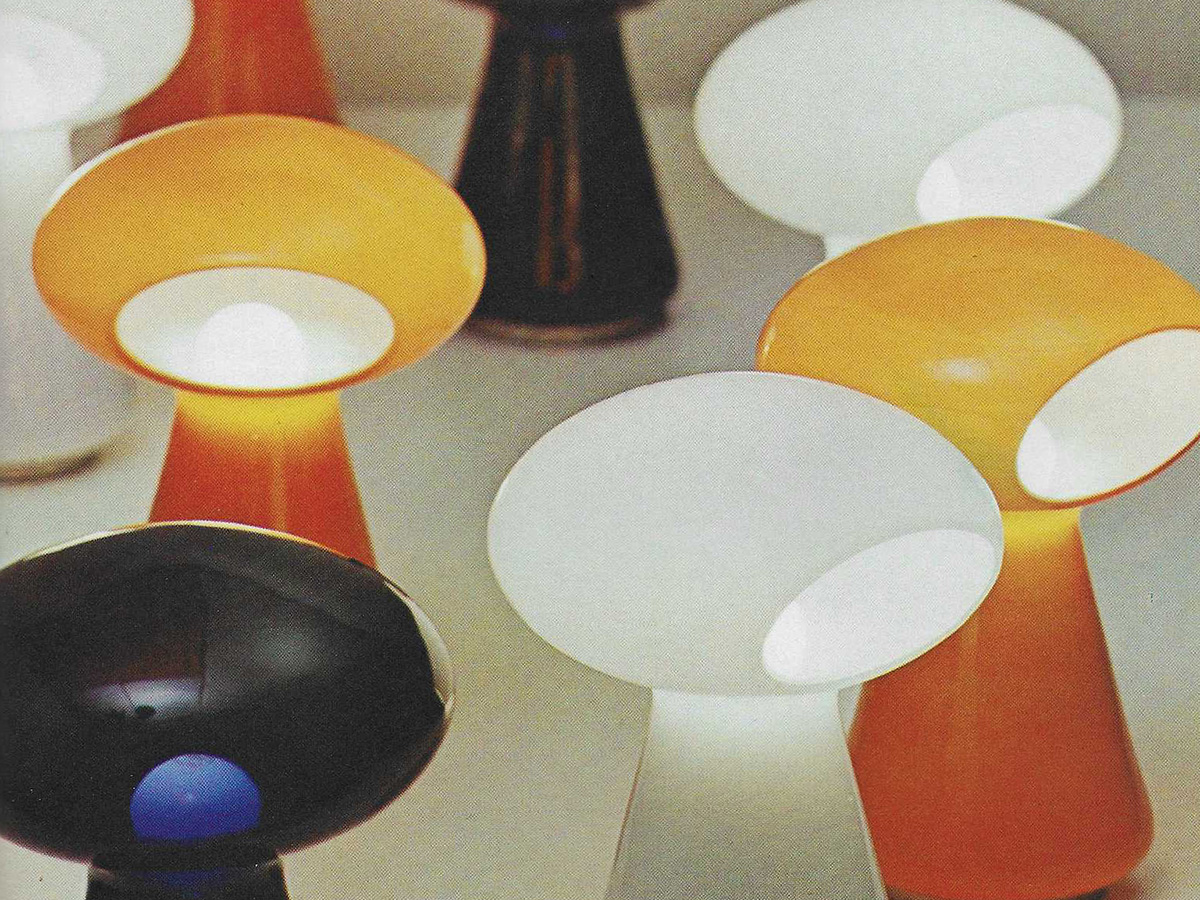
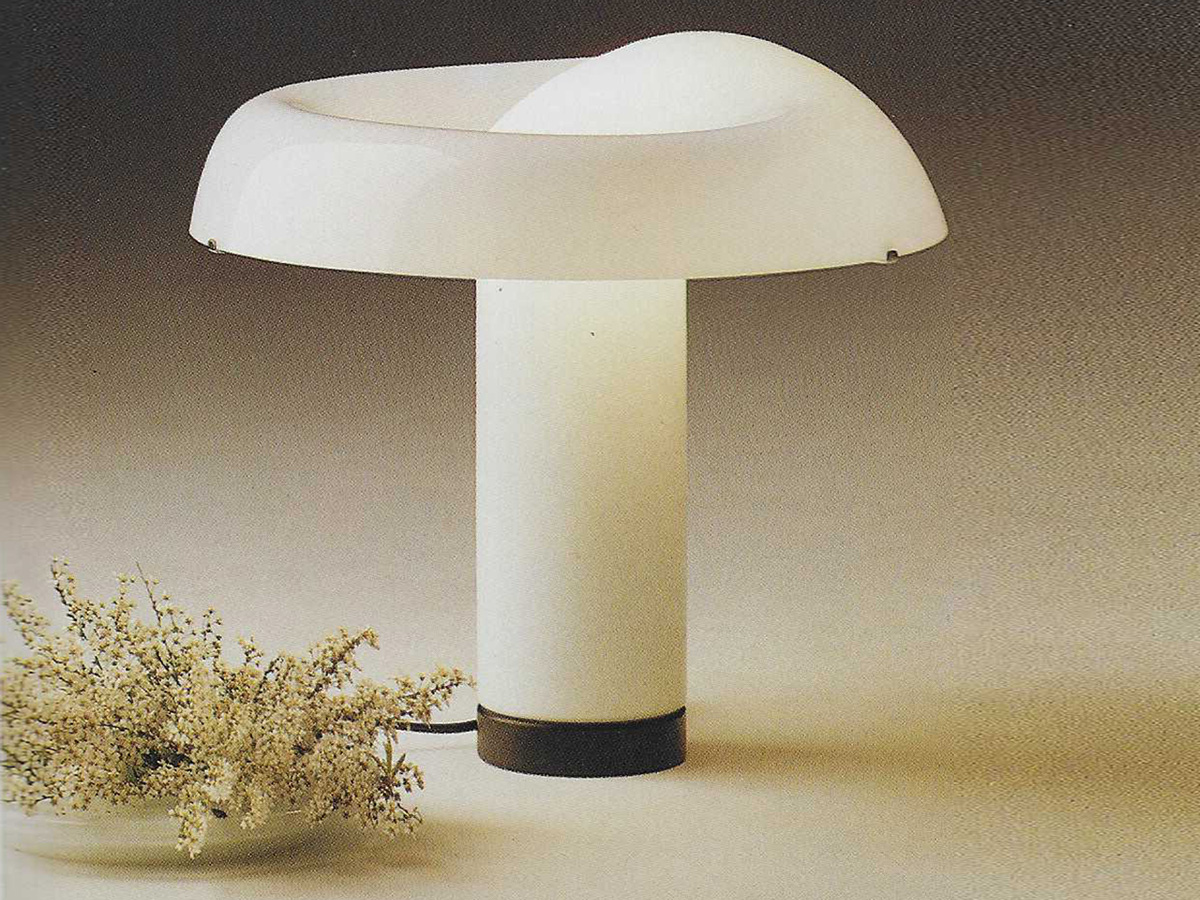
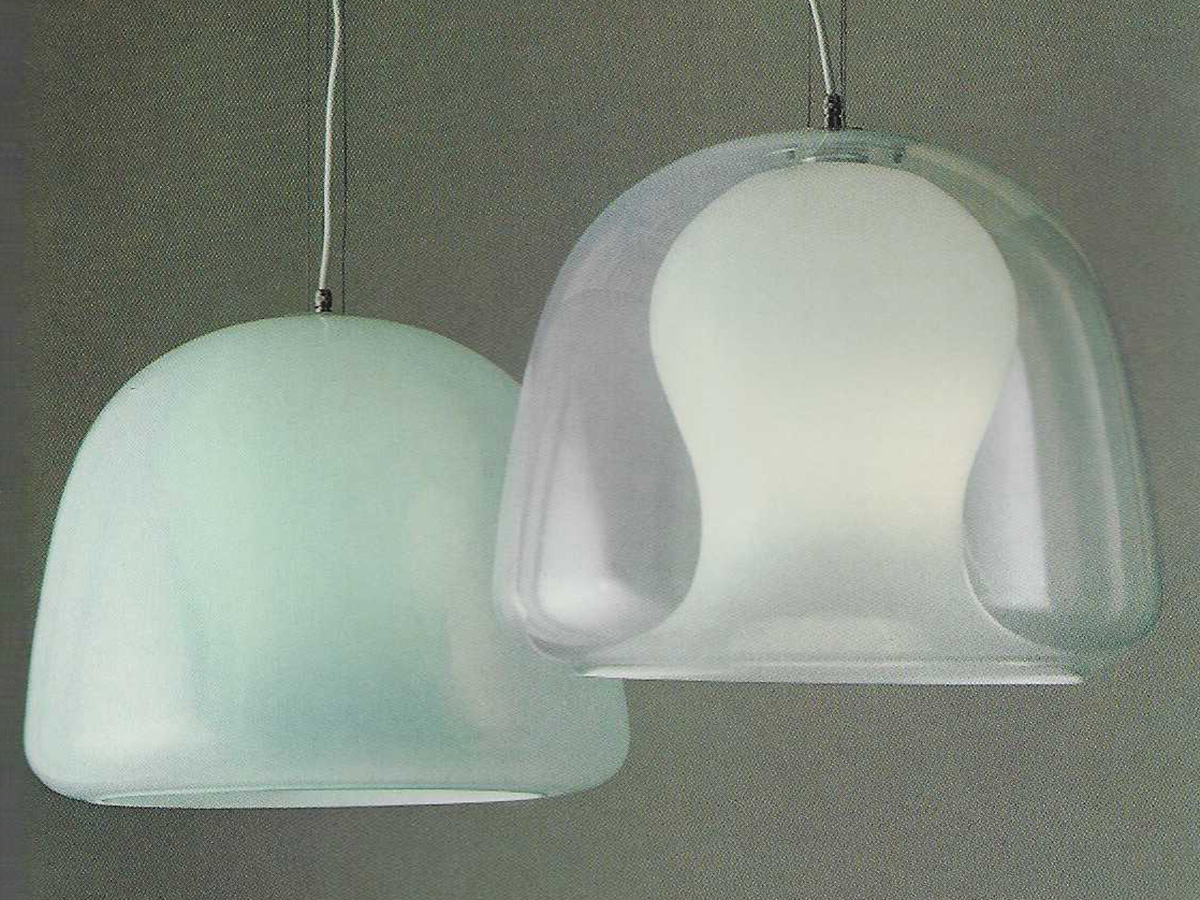
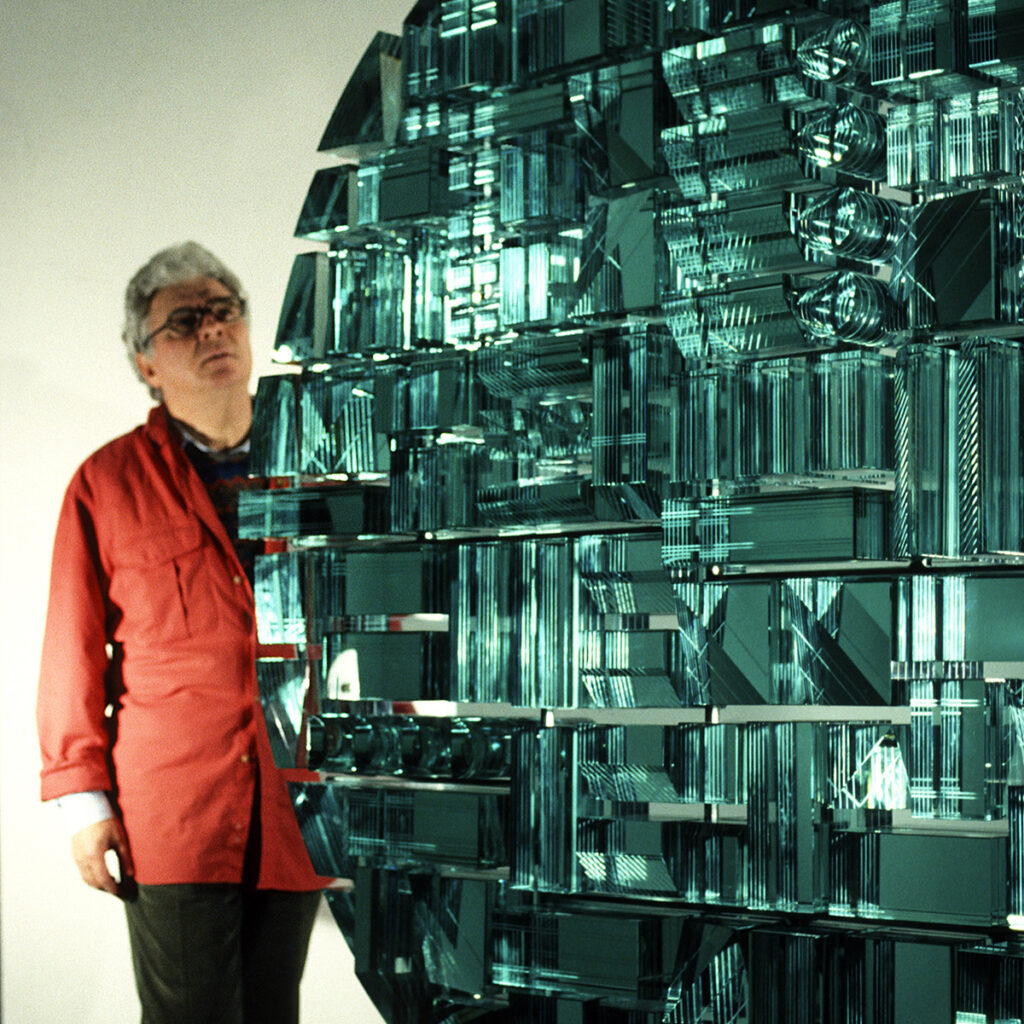
Luciano Vistosi’s artistic career began in the glassworks, before taking on a life of its own. The inventive freshness found in the lamps, cups and everyday objects successfully created by Luciano Vistosi up until the 1970s underlies the true outcome of his talent: sculpture.
At the end of the 1960s, his attention turned to blown glass. In the early 1970s, Vistosi created his first large sculptures in the glassworks furnace. From this moment on, Vistosi alternated between the different techniques he had experimented with, creating sculptures in blown glass and carved glass blocks over the years.
His first solo exhibition, in 1968, at the Galleria Alfieri in Venice, revealed to the public an artist who was already mature and rich in a new poetics and great plastic value. Through the glass sculptures he exhibited here, the refinement of his technique emerged, as did his overwhelming love for this material, a love that would never leave him. In the same year, he held a solo exhibition in San Francisco and, in the following decade, others in Venice, Cologne and Düsseldorf.
In the early 1980s, the Ca’ Pesaro Museum of Modern Art in Venice dedicated a major solo exhibition to him, further cementing his success with the public and critics alike. This was followed in quick succession by exhibitions in Madrid, Florence, Segovia and Milan.
Luciano Vistosi’s artistic career began in the glassworks, before taking on a life of its own. The inventive freshness found in the lamps, cups and everyday objects successfully created by Luciano Vistosi up until the 1970s underlies the true outcome of his talent: sculpture.
At the end of the 1960s, his attention turned to blown glass. In the early 1970s, Vistosi created his first large sculptures in the glassworks furnace. From this moment on, Vistosi alternated between the different techniques he had experimented with, creating sculptures in blown glass and carved glass blocks over the years.
His first solo exhibition, in 1968, at the Galleria Alfieri in Venice, revealed to the public an artist who was already mature and rich in a new poetics and great plastic value. Through the glass sculptures he exhibited here, the refinement of his technique emerged, as did his overwhelming love for this material, a love that would never leave him. In the same year, he held a solo exhibition in San Francisco and, in the following decade, others in Venice, Cologne and Düsseldorf.
In the early 1980s, the Ca’ Pesaro Museum of Modern Art in Venice dedicated a major solo exhibition to him, further cementing his success with the public and critics alike. This was followed in quick succession by exhibitions in Madrid, Florence, Segovia and Milan.
At the same time, starting in 1973, he was invited to participate in group exhibitions around the world, in the most prestigious museums and galleries: from the Landesmuseum in Kassel to the Hankyu Gallery in Osaka, from the Hokkaido Museum of Modern Art in Sapporo to the Brinkmann Gallery in Bonn, from the National Building Museum in Washington to the Kunsthaus in Cologne, and many others.
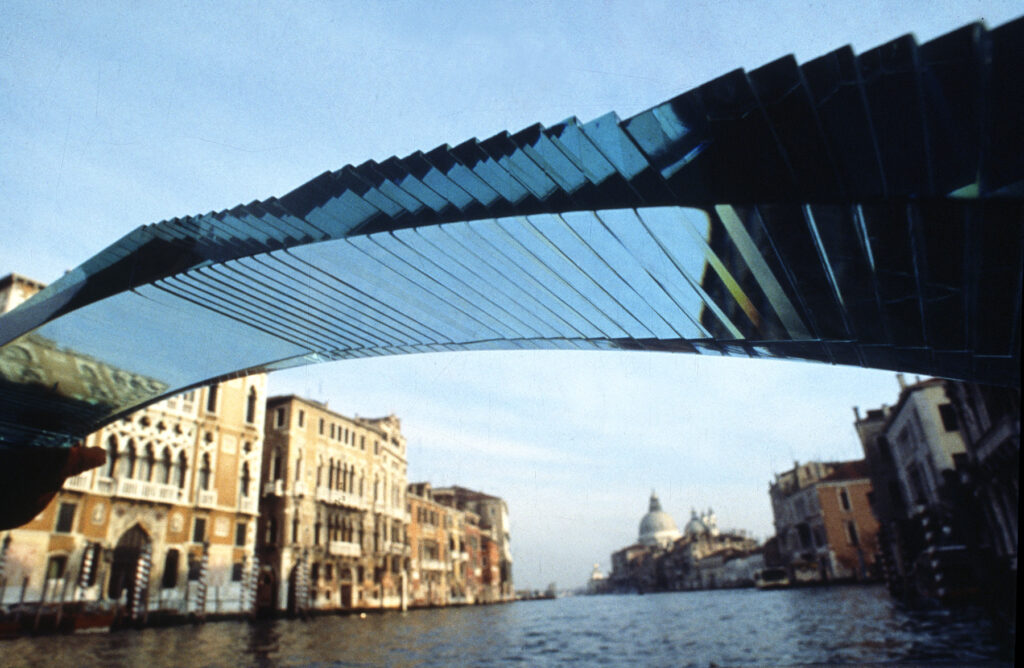
After years of study and design, in 1985 he created a model for the Accademia Bridge made entirely of glass, which was exhibited at the Tsukuba World Expo in the spring of that year. Based on this provocative and revolutionary idea, a decade later, the project for a bridge to replace the wooden one at the gates of the Venice Arsenal took shape: his model, measuring approximately eight metres, was exhibited with enormous success at the World Expo in Aichi in 2005.
In 1986, he was invited to the 42nd Venice International Art Biennale and in 1989 to the 20th International Biennale in São Paulo, Brazil.
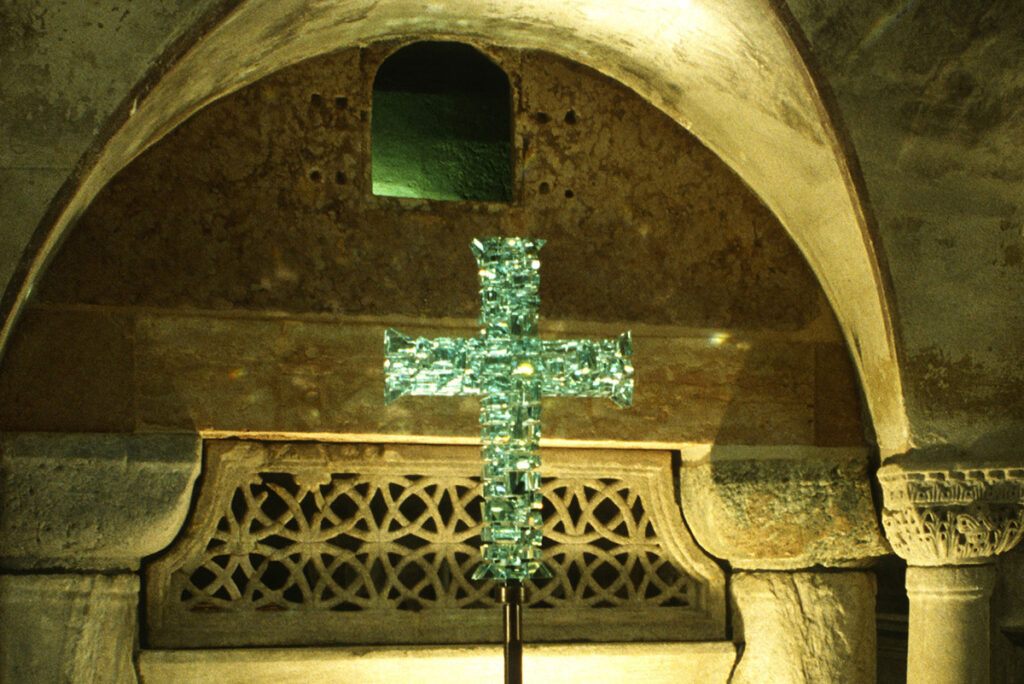
In 1994, he created a lagoon green glass cross for St. Mark’s Basilica, supported by a bronze stele and composed of a hundred square blocks, which was placed in the ancient crypt below the High Altar in December of that year.
Luciano Vistosi is a prominent figure in the world of Italian artistic research: some of the most significant Italian photographers, such as Ugo Mulas, Gianni Berengo Gardin, Paolo Monti and Franco Fontana, have interpreted the innovative character of his work through their images.
In 1986, he was invited to the 42nd Venice International Art Biennale and in 1989 to the 20th International Biennale in São Paulo, Brazil.
In 1994, he created a lagoon green glass cross for St. Mark’s Basilica, supported by a bronze stele and composed of a hundred square blocks, which was placed in the ancient crypt below the High Altar in December of that year.
Luciano Vistosi is a prominent figure in the world of Italian artistic research: some of the most significant Italian photographers, such as Ugo Mulas, Gianni Berengo Gardin, Paolo Monti and Franco Fontana, have interpreted the innovative character of his work through their images.
A shy and reserved man, Luciano Vistosi infuses his art with a vital energy that perhaps surprises even himself. His ability to capture light is more akin to painting than sculpture. The material is shaped in his hands with a lightness that brings us back to the pure lines of artists of the past who made formal elegance their hallmark. At the same time, his ability to capture light makes him extremely modern and contemporary, clothing his works – whether they be figures of subtle transparency, ancestral boulders skilfully tormented by his hands, or “constructions of light” – with a skilfully evocative refraction.
Despite being struck by a serious illness in the late 1990s, Luciano Vistosi never interrupted his artistic activity, continuing to create his sublime and delicate flashes of light in his studio-atelier in Murano, with strength and generous character, until the last days of his life. He died on 14 May 2010.