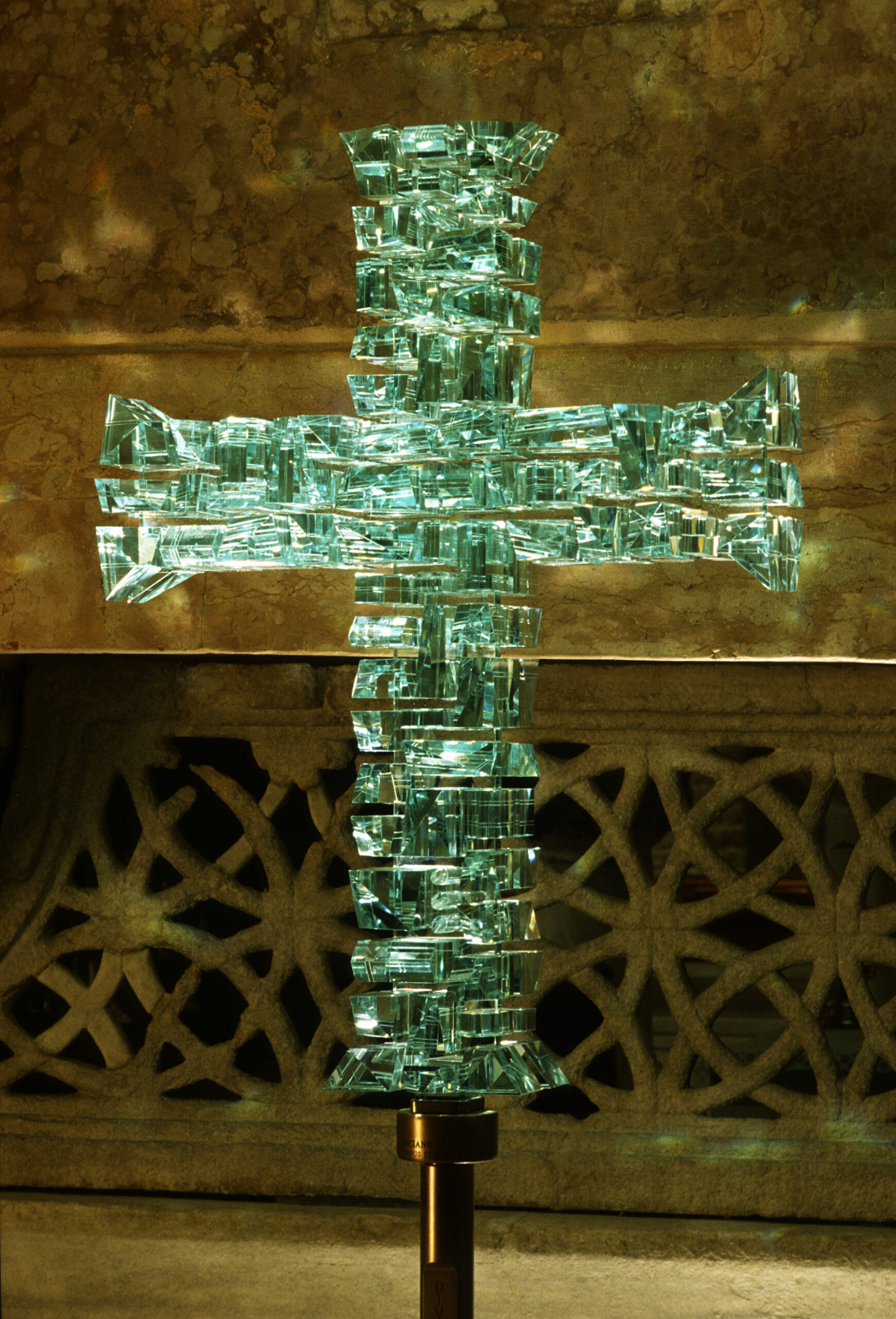
When Prof. Feliciano Benvenuti, First Procurator of St. Mark’s, suggested a year ago that I think of something (as he put it) for the Basilica, I was perplexed. I realised that there, in that marvellous golden gem, the testimonies of many centuries had been deposited, but none represented this troubled century that is coming to an end. None: a sign of expressive impotence? I also realised, visiting St Mark’s day after day, that the closer the works of art were to us chronologically in the passage of time, the more they lost their charm: they appeared less resplendent, less imbued with the mystical spirit that surrounds the entire Basilica.
What should I do?
Give up? The task excited me but also, in some ways, depressed me. It seemed impossible to align myself with those signs of faith, absolute religiosity and high spirituality that crowd the interior and exterior of the Basilica, and not only on the mosaic walls. It was necessary to enter into the same force of art and faith, but at the same time it was necessary not to renounce being contemporary, that is, to show the face of our time.
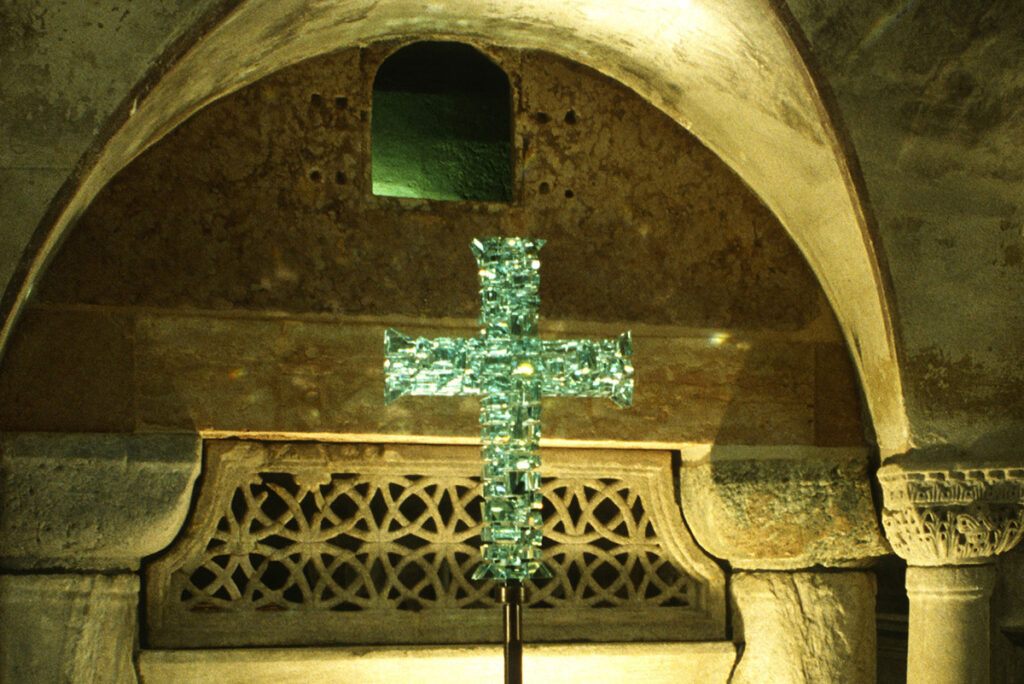
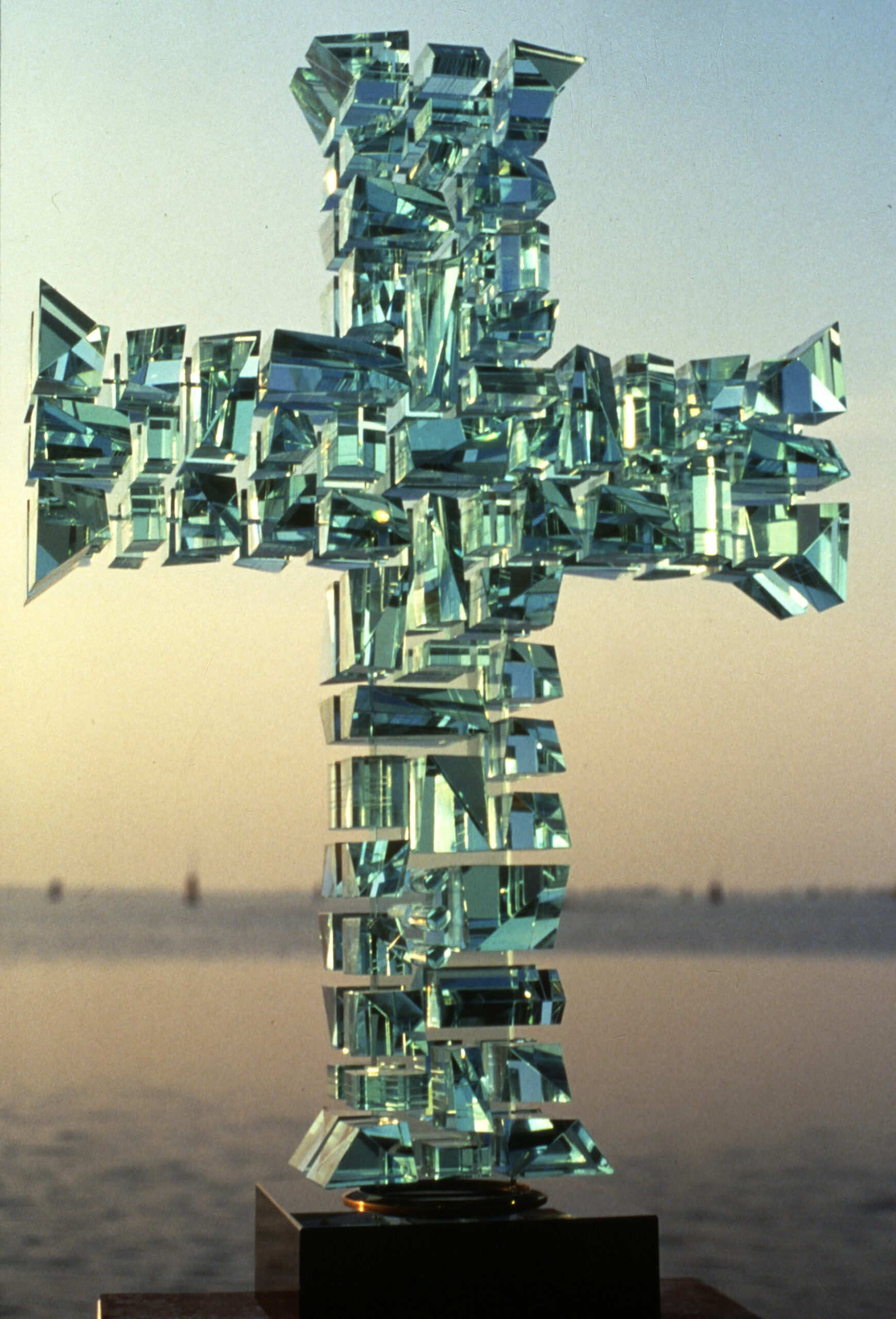
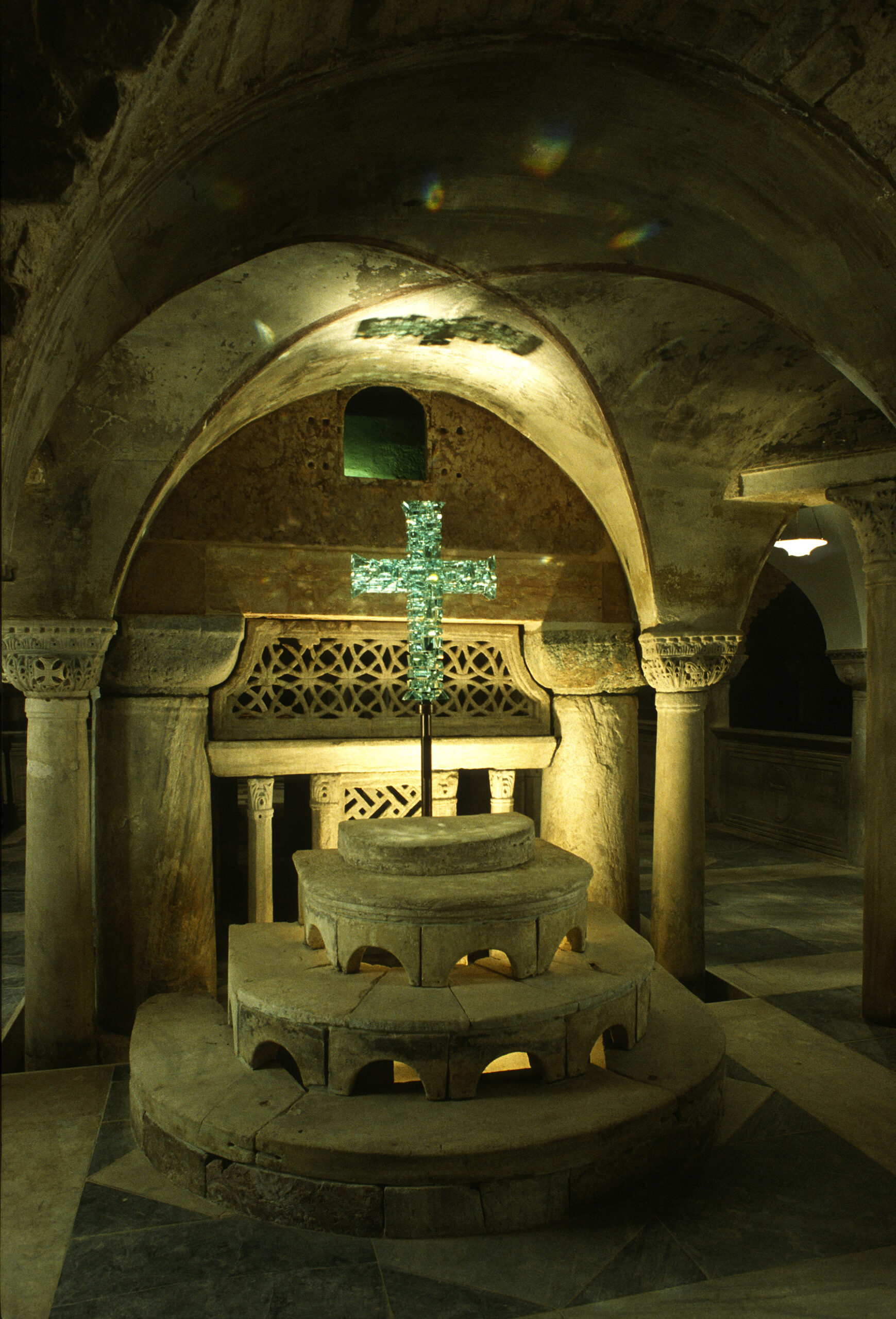
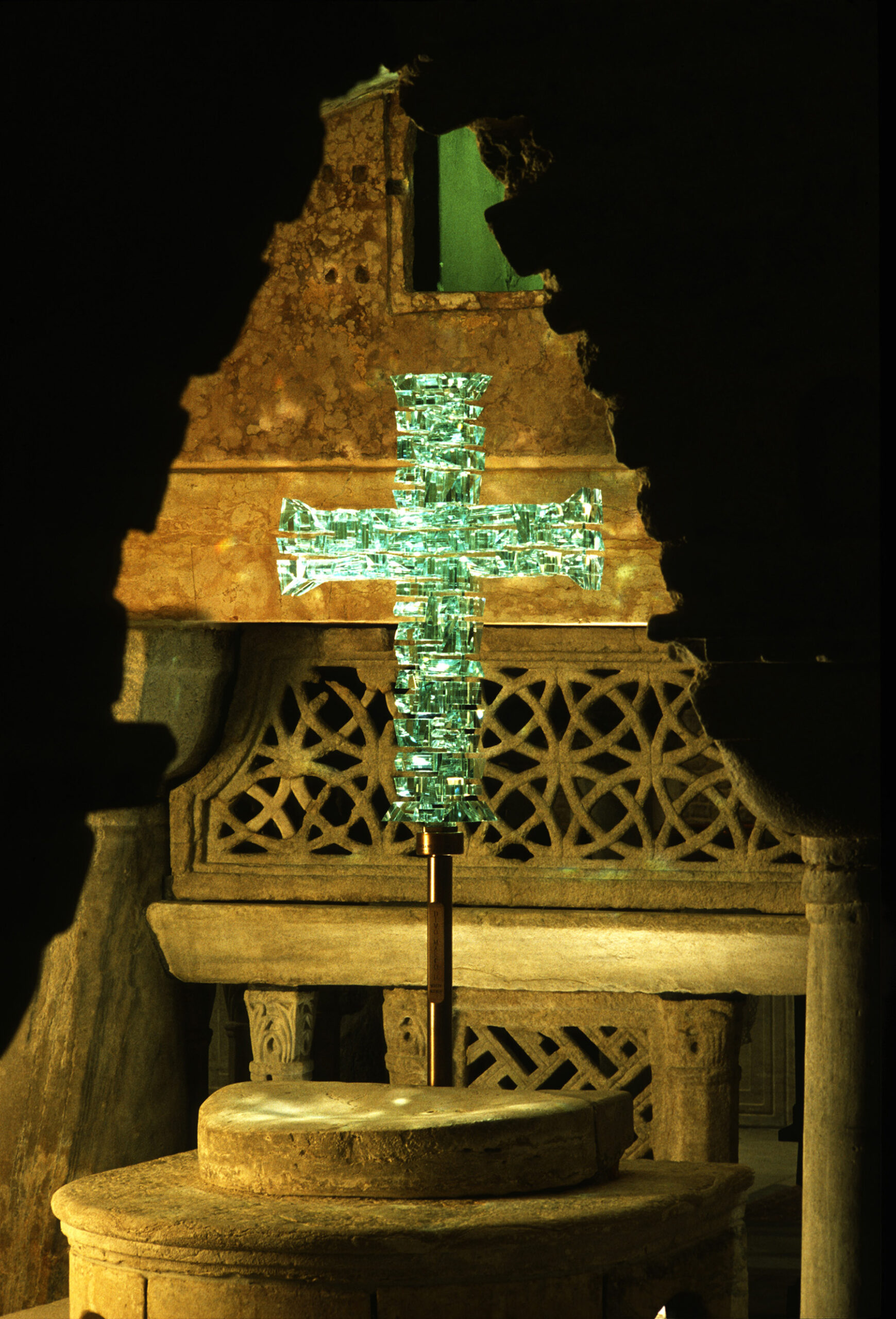
So, slowly but surely, with an inner drive that grew stronger every day, an idea took shape. It was that of a glass cross suspended in the air. It had to be a cross: a symbol like so many others that can be seen in St Mark’s. I noticed that many crosses were fixed to or leaning against the walls: early Christian and Byzantine crosses, Romanesque and Gothic crosses, generally made of carved stone, often perforated. Those crosses were a symbol. Mine too had to become a symbol. The project took shape within a few months. The cross was born, and now I humbly and anxiously prepare to place it in the golden Basilica. Composed of a hundred square blocks of light green glass, it appears (at least to me) as something suspended, immaterial, spiritual. In fact, the transparent “soul” that binds the blocks forming the cross to the interior cannot be distinguished from the exterior. I would venture to say that, in the eyes of the faithful, the cross becomes an “explosion of faith” that expands from the glass fragments.
It was also necessary to decide where to place the cross. It is not very large, but I did not want it to appear in the Basilica with the presumptuousness of a modern artist in the face of the great testimonies of the past. I therefore proposed placing the cross in the crypt of the Basilica, behind the altar. My idea was approved (and I am happy about this) by the Patriarch. In this way, supported by a bronze stem, the cross will appear to rise from the very spot where St Mark’s tomb once stood: a place that corresponds, in a vertical line, to the high altar of the Basilica. The cross will therefore be located just below the current sarcophagus.
I am delighted and moved by the honour bestowed upon me. I realise that, set within the supreme beauty of that golden treasure chest that is the Basilica, my cross may appear modest. But I am equally convinced that in the transparency of the glass and the simplicity of its form, it will also embody a spirituality linked to our times: suspended in the air, dematerialised, almost removed from the anxieties and neuroses of the world. I hope that this testimony will be received not so much as an act of art, but as an act of faith.
Luciano Vistosi
Venice 7 December 1994