


Alessandra Vistosi
I was 12 or 13 years old.
At 3 o’clock in the morning, my father woke me up and told me to go with him to Murano. It was rare for him to involve me in his affairs. I instinctively understood that it must be important.
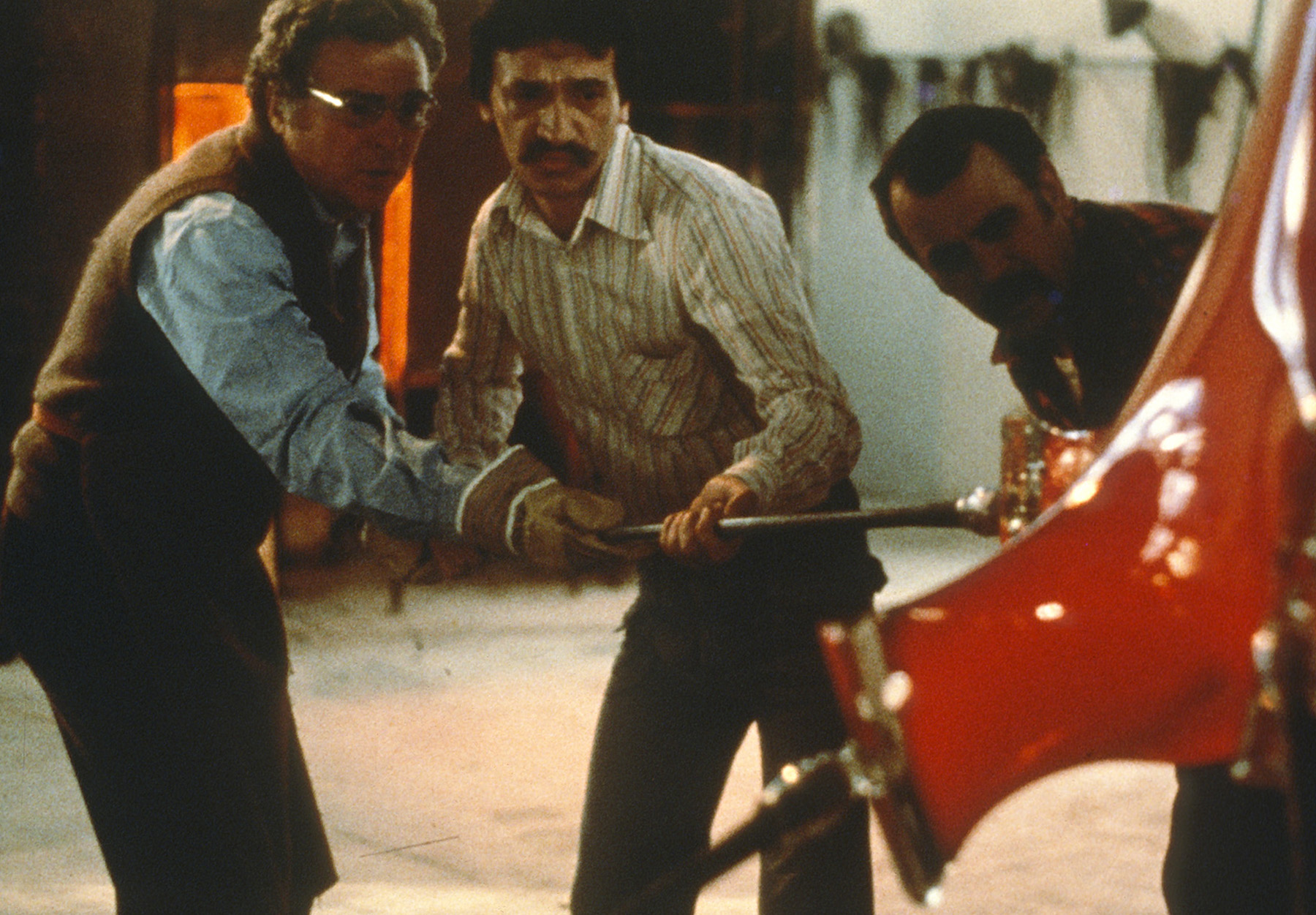
In the furnace in Murano, there were four or five men whom I had seen during my visits to the glassworks, waiting for instructions.
I have a vivid memory of darkness, of furnaces burning with a dull, gloomy noise, of concentration and of marks on the ground that I couldn’t understand.
During the crossing from the Lido to Murano, my father told me that I had to stay in a corner, completely still. Woe betide me if I spoke or moved! If I couldn’t stand the heat, I would have to leave through a small door behind me.
The scene is motionless, unreal, and from the mouth of the oven, the incandescent mass that looks like a sun attached to a pole is brought to the centre of the furnace.
Shouted words pierce the silence and suddenly everything becomes excited, feverish, as if trying to keep alive someone you don’t want to lose…
A code made up of glances and synchronicities allows the marks on the ground, the instructions given and the gestures to find the right emotional unity, but the material is alive and cannot be easily moulded; one must adapt and, with great skill and humility, follow its course in order to get the most out of it.
Time is short, too short, and to give it the desired shape, one must contend with the warm and increasingly faint breath of this weak sun.
It is born and dies like this, in those few but intense heartbeats, to give shape to what does not exist, but which stops time forever.
And the shape is there. Real, clear, perfect.
The heat is suffocating now more than ever. But I knew that, so I’m not afraid. A glance from my father telling me I can move makes me go to him.
The tension is gradually easing and when he hugs me, I can feel that he is exhausted, drained.
I accompany him to his study, which in those years could be reached by taking a short walk in the open air, and I feel that I am back where I belong, among the things I know, with my dad, the same as always.
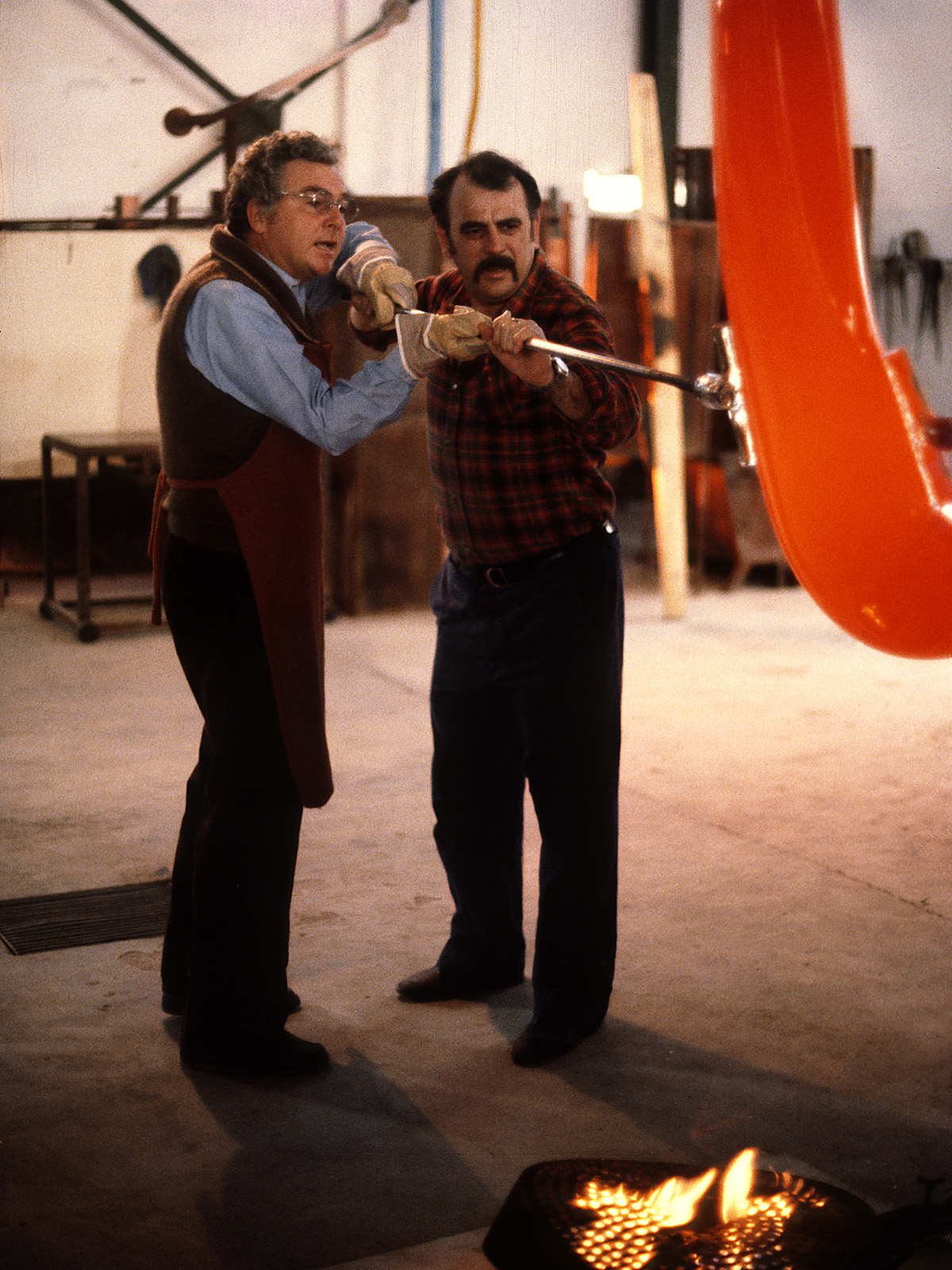
During the crossing from the Lido to Murano, my father told me that I had to stay in a corner, completely still. Woe betide me if I spoke or moved! If I couldn’t stand the heat, I would have to leave through a small door behind me.
The scene is motionless, unreal, and from the mouth of the oven, the incandescent mass that looks like a sun attached to a pole is brought to the centre of the furnace.
Shouted words pierce the silence and suddenly everything becomes excited, feverish, as if trying to keep alive someone you don’t want to lose…
A code made up of glances and synchronicities allows the marks on the ground, the instructions given and the gestures to find the right emotional unity, but the material is alive and cannot be easily moulded; one must adapt and, with great skill and humility, follow its course in order to get the most out of it.
Time is short, too short, and to give it the desired shape, one must contend with the warm and increasingly faint breath of this weak sun.
It is born and dies like this, in those few but intense heartbeats, to give shape to what does not exist, but which stops time forever.
And the shape is there. Real, clear, perfect.
The heat is suffocating now more than ever. But I knew that, so I’m not afraid. A glance from my father telling me I can move makes me go to him.
The tension is gradually easing and when he hugs me, I can feel that he is exhausted, drained.
I accompany him to his study, which in those years could be reached by taking a short walk in the open air, and I feel that I am back where I belong, among the things I know, with my dad, the same as always.
Enrica Berti
Meeting with Enrica Berti and Arianna Corbetta in anticipation of the visit by the children of the “Principessa Maria Letizia” nursery school in Murano for their end-of-year recital inspired by Luciano Vistosi.
He guided us from one room to another in his studio with the same enthusiasm as the children. We could feel his eyes scrutinising ours as if to capture our amazement and wonder.
We really didn’t know whether to let ourselves be overwhelmed by the sensations of light in the glass or by his soothing voice, with which he would tell his story to the children aged 25 months to 6 years who would soon be arriving in those magical places…
So we felt drawn in and he talked and talked…
When his footsteps on the light grey iron staircase leading to the loft stopped their rhythmic sound and he opened the door… we felt stunned by so much grace, light and quiet.
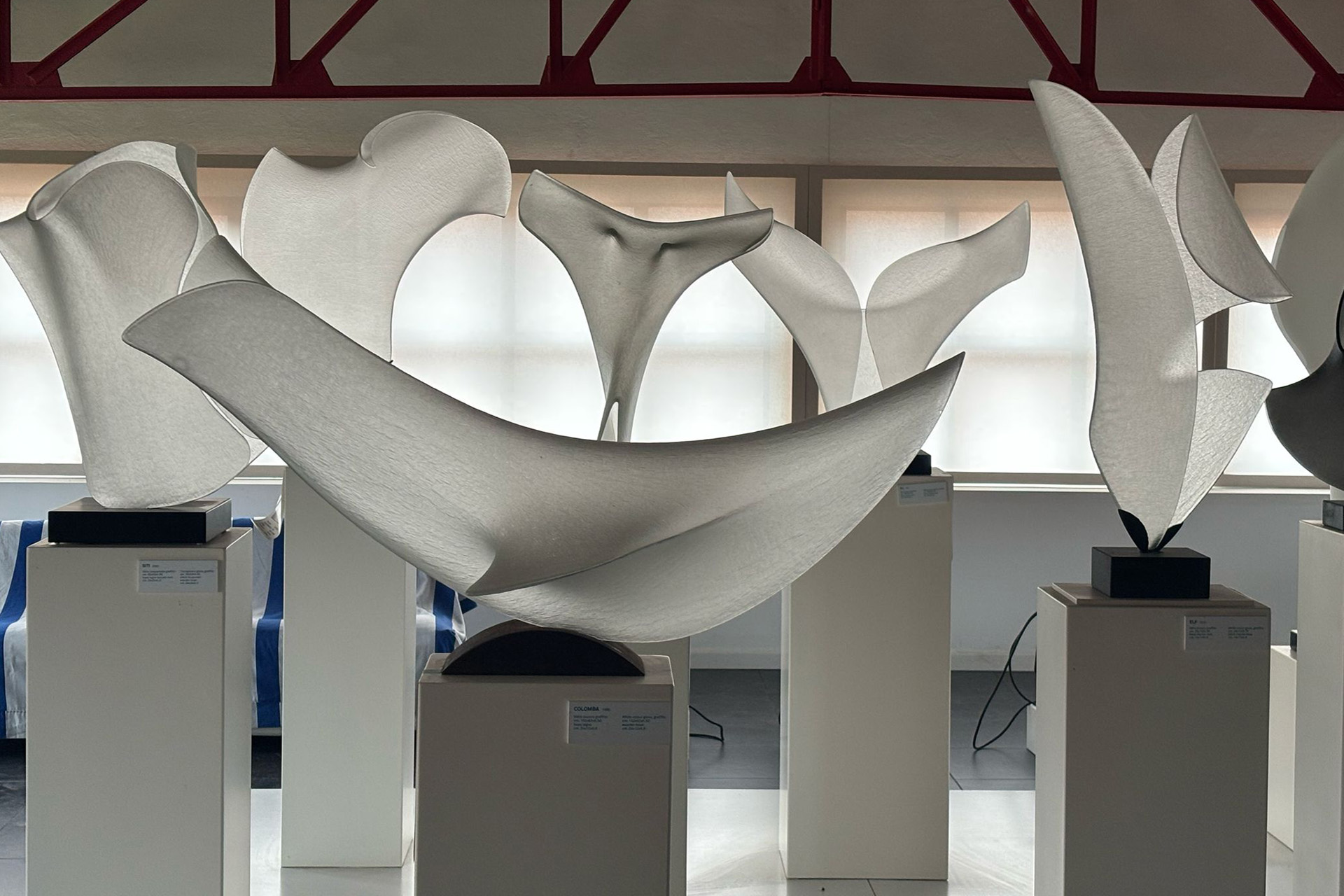
He told us that one day some caterpillars remained in the room. The closed windows (just like at that moment) left them with no way out. Perhaps that was what he kept insisting was his intuition. And so the caterpillars became butterflies and, even though they flew around every corner, they could not get out. They settled peacefully, becoming what we were looking at with such amazement: white, lagoon green and black glass shapes… motionless and captured in their most intimate and beautiful moment.
He had managed to do something divine.
We continued to listen to him, thinking about the effect such a room would have on children. He was certainly thinking about it too.
And, almost amused, he confessed to us his life as an incurable Pinocchio… who would therefore change the story of that room a thousand times over… who knows, he said, what I will really tell the children when they come here. And he told us this with a twinkle in his eyes, the same twinkle that children have when they know they are telling fantasies but pretend not to know, to make the adults listening to them happy.
Thank you, Maestro Vistosi. Your gift will remain precious in our hearts and in the photo albums of every child in Murano.
Enrica Berti
Murano, 6 April 2010
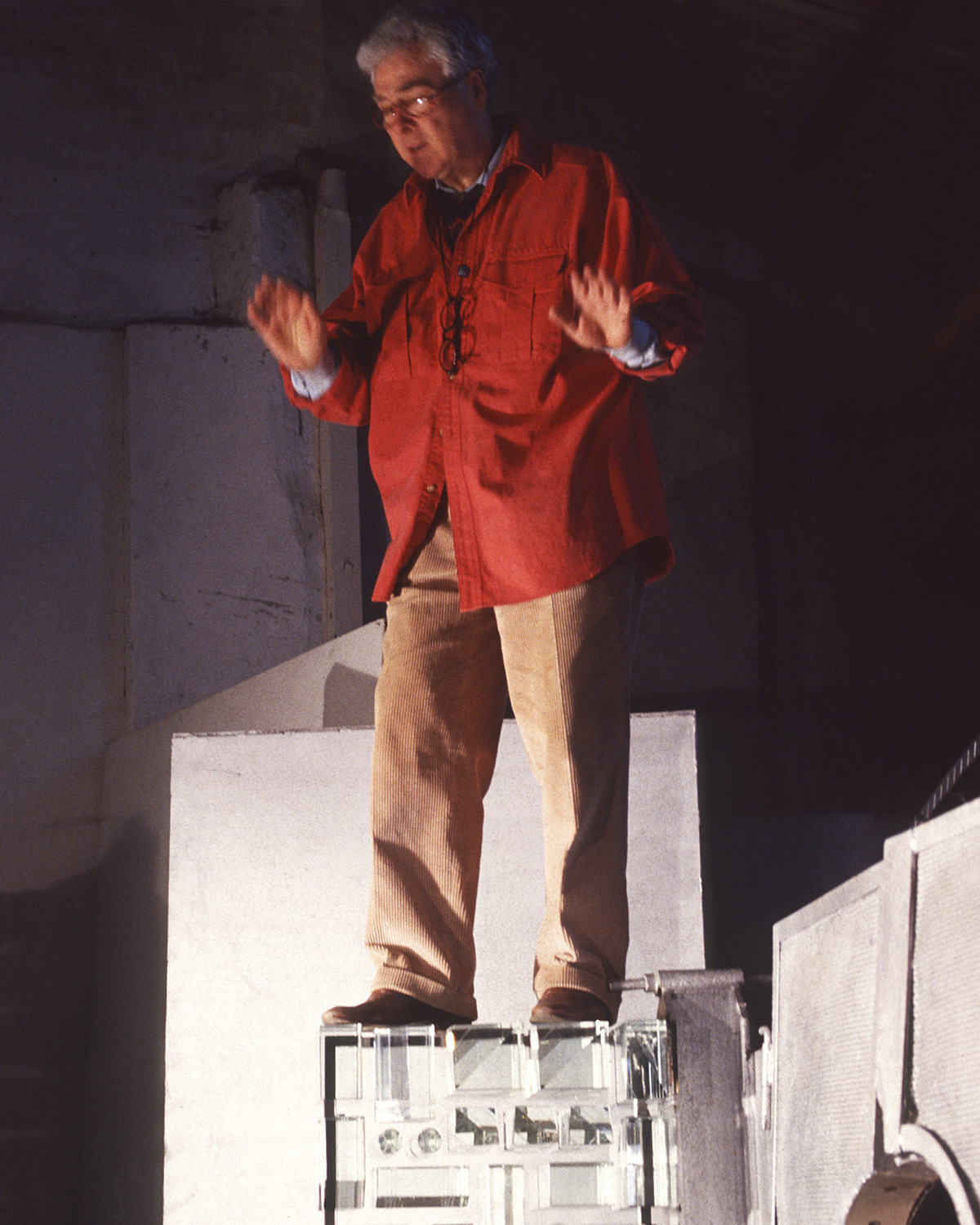
So we felt drawn in and he talked and talked…
When his footsteps on the light grey iron staircase leading to the loft stopped their rhythmic sound and he opened the door… we felt stunned by so much grace, light and quiet.
He told us that one day some caterpillars remained in the room. The closed windows (just like at that moment) left them with no way out. Perhaps that was what he kept insisting was his intuition. And so the caterpillars became butterflies and, even though they flew around every corner, they could not get out. They settled peacefully, becoming what we were looking at with such amazement: white, lagoon green and black glass shapes… motionless and captured in their most intimate and beautiful moment.
He had managed to do something divine.
We continued to listen to him, thinking about the effect such a room would have on children. He was certainly thinking about it too.
And, almost amused, he confessed to us his life as an incurable Pinocchio… who would therefore change the story of that room a thousand times over… who knows, he said, what I will really tell the children when they come here. And he told us this with a twinkle in his eyes, the same twinkle that children have when they know they are telling fantasies but pretend not to know, to make the adults listening to them happy.
Thank you, Maestro Vistosi. Your gift will remain precious in our hearts and in the photo albums of every child in Murano.
Enrica Berti
Murano, 6 April 2010